What is Perplexity AI?
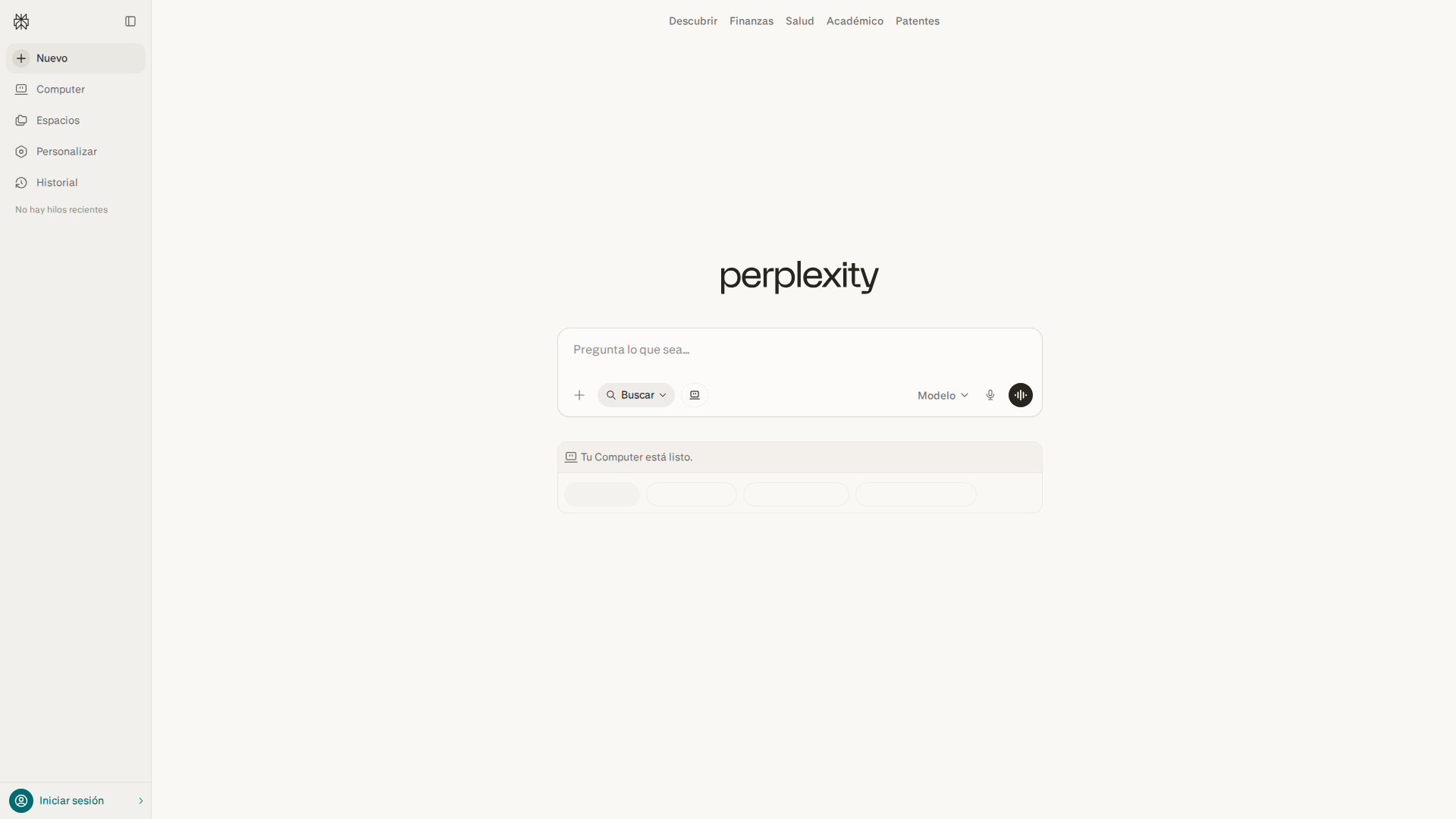
Perplexity AI is an AI-powered search engine that answers questions directly with cited sources rather than returning a list of links to click. By 2026 it has reached 100 million monthly active users — a sign that the way people research is shifting fast. Instead of ten blue links, you get one synthesized answer with inline citations so you can verify every claim.
The core idea is simple: Perplexity reads the web for you. You ask a research question, it queries multiple sources, synthesizes them into a readable answer, and shows you exactly where each piece of information came from. For anyone who has ever opened eight tabs to answer one question, that workflow is a meaningful upgrade.
Perplexity AI vs Google 2026: Head-to-Head
AI search traffic grew 527% year-over-year between January–May 2024 and January–May 2025 (Semrush), yet 95% of Americans still use traditional search every month (SparkToro/Datos, August 2025). This is not a winner-takes-all race. Google held 90.39% global search share in May 2026 (StatCounter), and Google AI Mode passed significant usage milestones that same period. Both tools are evolving — the question is which one fits your task.
| Category | Perplexity AI | Google Search |
|---|---|---|
| Research synthesis | ✅ Excellent | ⚠️ Improving with AI Mode |
| Inline citations | ✅ Yes, on every answer | ⚠️ Partial (AI Overviews) |
| Local / navigation | ❌ Weak | ✅ Best in class |
| Image / visual search | ❌ Limited | ✅ Strong (Lens, Images) |
| Shopping queries | ❌ Not designed for it | ✅ Product listings, ads |
| Real-time web access | ✅ Free and Pro | ✅ Yes |
| Free tier usefulness | ✅ Genuinely capable | ✅ Always free |
| Pro plan price | $20/month | $20/month (One AI Premium) |
The clearest framing from independent reviewers: use Perplexity for cited synthesis first, then Google for original pages, local intent, images, and navigational queries. They complement each other more than they compete.
Key Features
- Cited answers: Every claim links back to a numbered source. You can verify, not just trust.
- Real-time web access: Included on the free plan — not gated behind a paywall.
- Focus modes: Narrow searches to Reddit, academic papers, YouTube, or news to filter noise.
- Pro Search: Multi-step reasoning that synthesizes across sources before answering — available in limited daily uses on free, unlimited on Pro.
- File uploads: Upload PDFs and documents on Pro and ask questions directly against the content.
- Model selection: Pro users can choose which underlying AI model powers each query.
- Conversational threading: Follow-up questions maintain context across a research session.
Pricing
Free plan: Genuinely useful for casual to moderate research. Includes real-time web access, cited answers, and a limited number of Pro Searches per day. Most reviewers note this is enough for everyday use.
Perplexity Pro — $20/month: Unlimited Pro Searches, file uploads (PDFs, documents), and model selection. Worth it for anyone who researches repeatedly as part of their workflow.
For context, Google One AI Premium also costs $20/month and bundles Gemini Advanced with 2TB of Google Drive storage — a different value proposition aimed at users already in the Google ecosystem. ChatGPT Plus is also $20/month but limits Deep Research uses per month on that tier.
Pros and Cons
Pros
- Direct, cited answers cut research time significantly
- Free plan is genuinely capable, not a stripped teaser
- Real-time web access on all plans
- Focus modes let you target specific source types
- Conversational follow-ups maintain research context
- $20/month Pro is price-competitive with all major alternatives
Cons
- Citation reliability varies — always verify claims that matter
- Shallow reasoning on complex, multi-step analytical tasks
- Weak for long-form writing and serious coding work
- Not designed for local search, navigation, or shopping
- No image generation or visual search capabilities
Who Should NOT Use Perplexity AI
- Local searchers: Finding restaurants, directions, or nearby services — Google Maps and Google Search are the clear choice here.
- Shoppers: Google Shopping’s product listings, price comparisons, and reviews have no real equivalent in Perplexity.
- Visual researchers: Google Images and Lens handle visual queries that Perplexity does not support well.
- Deep coders: For serious coding tasks, dedicated tools outperform Perplexity’s coding depth.
- High-stakes fact-checkers: Perplexity’s citations can occasionally misrepresent sources. For legal, medical, or financial decisions, always go to primary sources directly.
Verdict
For research — understanding a topic, comparing options, synthesizing findings from multiple sources — Perplexity AI is meaningfully better than Google in 2026. It answers questions directly instead of returning a list of links to click, and the citations are real, not decorative. The free plan is genuinely useful. At $20/month, Pro adds enough capability to justify the cost for anyone who researches regularly.
Google is not losing. It still dominates navigation, local search, shopping, and visual queries, and its AI Mode is improving. The honest answer is that these tools are not competing for the same use case, even though they appear to be on the surface.
The practical workflow most experts converge on: start with Perplexity to synthesize and understand a topic, then use Google to verify sources, find local results, or navigate to specific pages. Use both, not one instead of the other.
Rating: 8.5/10 — Best AI search tool for research synthesis available on a free plan. A Google complement, not a replacement.
Sources Checked
- Perplexity AI Strengths and Weaknesses 2026 — konabayev.com
- Perplexity AI Review 2026 — tool-atlas.com
- I Used Perplexity AI Instead of Google for 30 Days — tecdigi.net
- Perplexity vs Google Search 2026 — techshali.com
- Perplexity vs Google for Research 2026: Verdict — perplexityaimagazine.com
FAQ
Is Perplexity AI better than Google for research in 2026?
Yes, for research synthesis. Perplexity answers directly with inline citations instead of returning links. For navigation, local search, shopping, and images, Google remains the superior tool.
Is Perplexity AI free?
Yes. The free plan includes real-time web access and cited answers, with a limited number of deep Pro Searches per day. Perplexity Pro costs $20/month and removes those limits.
What does Perplexity Pro add over the free plan?
Unlimited Pro Searches, the ability to upload PDFs and documents to query directly, and the option to select which AI model powers your searches. Worth it for regular researchers; the free plan covers casual use well.
Can Perplexity replace Google entirely?
No. Perplexity does not handle local search, navigation, shopping, or image queries well. The recommended workflow is to use both: Perplexity to synthesize and understand, Google to navigate and verify.
How does Perplexity compare to ChatGPT for research?
Perplexity’s main advantage is real-time web citations included on the free plan. ChatGPT Plus ($20/month) offers Deep Research but with limited uses per month on that tier. For daily cited research without paying, Perplexity has a practical edge.