What is Socratic by Google?
Socratic is a free AI-powered homework helper built by Google. Originally acquired in 2018 and integrated into Google’s broader ecosystem — including Google Lens — it lets students point their camera at any problem and instantly receive explanations sourced from trusted educational content across the web.
In 2026, Socratic remains one of the few genuinely free AI homework tools available. That zero-cost promise is its clearest differentiator from ChatGPT and most of the newer homework-help apps flooding the market.
Key Features
- Photo-to-answer input: Snap a photo of a math problem, science question, or essay prompt and Socratic identifies it, then surfaces explanations from sources like Khan Academy and YouTube.
- Multi-subject coverage: Works across math, science, literature, history, and social studies — broad enough for most K–12 coursework.
- Google Lens integration: Leverages Google’s visual search infrastructure for faster, more accurate problem recognition.
- Curated rather than generated: Instead of writing new answers from scratch, Socratic surfaces vetted educational content — which reduces (though does not eliminate) the risk of hallucinated responses on standard curriculum topics.
- Mobile-first design: Built as a mobile app, making it easy to use wherever homework happens.
Socratic vs ChatGPT: Head-to-Head
| Feature | Socratic by Google | ChatGPT |
|---|---|---|
| Price | Free | Free tier + paid plans |
| Primary input | Camera / photo | Text, image, voice |
| Answer style | Curated web sources | Generated explanations |
| Step-by-step depth | Basic | Detailed |
| Advanced topics | Limited | Strong |
| Follow-up dialogue | Not supported | Full conversation |
| Essay / writing help | No | Yes |
| Offline use | Not supported | Not supported |
| Best for | K–12, quick factual lookups | Any level, deep learning |
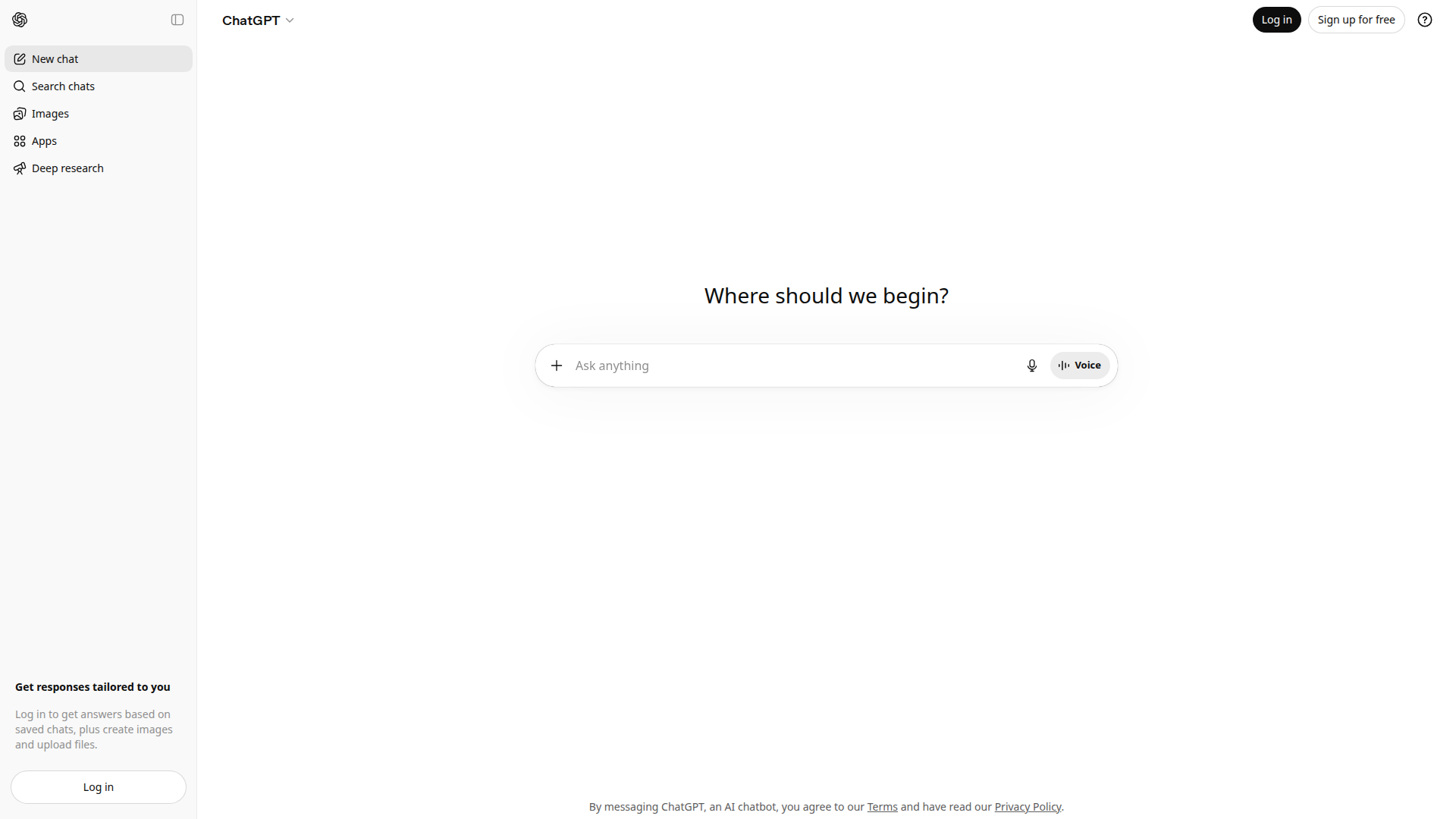
The core difference: Socratic finds and surfaces existing educational content. ChatGPT generates explanations from scratch. For standard K–12 curriculum topics, Socratic’s curated approach is fast and generally reliable. But it cannot hold a conversation, cannot ask clarifying questions, and cannot help with open-ended writing — areas where ChatGPT is clearly stronger.
Pricing
Socratic by Google is completely free. There are no paid tiers, no subscription, and no premium features locked behind a paywall. Download the app, open it, use it — no account required in most markets.
ChatGPT offers a free tier with usage limits and a paid Plus plan for access to more advanced models and higher limits. If budget is the deciding factor, Socratic wins by default.
Pros and Cons
Pros
- Completely free with no hidden costs or upsells
- Camera input is fast and intuitive — no typing required
- Backed by Google’s search quality infrastructure
- Surfaces real educational sources, reducing hallucination risk for common topics
- Simple enough for younger or less tech-savvy students
Cons
- Step-by-step explanations are less detailed than ChatGPT or dedicated math tools like Photomath
- Coverage gaps appear quickly at advanced or niche academic levels
- No conversational follow-up — you cannot ask “why?” or “explain that differently”
- Development pace has slowed noticeably compared to newer AI competitors
- Requires a reliable internet connection; no offline functionality
- Not useful for essay writing, argumentation, or open-ended assignments
Who Should NOT Use Socratic
- College and university students: Coverage gaps appear quickly at higher academic levels. ChatGPT or subject-specific tools handle advanced coursework significantly better.
- Students who need deep understanding: If you need to know why an answer is correct — not just what it is — Socratic’s depth is often insufficient.
- Essay writers: Socratic does not help with writing structure, argumentation, or feedback. ChatGPT is the clear choice for written assignments.
- Students in areas with unreliable internet: Socratic requires a consistent connection and has no meaningful offline mode.
- Advanced STEM learners: For anything beyond standard K–12 curriculum — calculus, organic chemistry, physics derivations — Socratic will hit its ceiling quickly.
Verdict
Socratic by Google is the right tool for one specific student: a middle or high schooler who needs a quick, free, zero-friction answer to a standard curriculum question. Point your camera, get an explanation, move on. It is honest, it is free, and it works for that job.
But the moment your needs go beyond that — college-level material, genuine comprehension, essay help, any back-and-forth dialogue — ChatGPT is the more capable choice. Reviewers in 2026 consistently note that Socratic’s development pace has slowed relative to the broader AI field, and that gap will likely widen as competitors continue shipping.
For a student choosing between the two: start with Socratic if you are in K–12 and need something fast and free. Upgrade to ChatGPT when you need depth, writing assistance, or coverage Socratic cannot provide.
Bottom line: 7.5/10 — excellent within its lane (free, K–12, visual input), limited outside of it.
FAQ
Is Socratic by Google free?
Yes. Socratic is completely free with no paid tiers or subscription required.
Is Socratic better than ChatGPT for homework?
For quick K–12 factual lookups using photo input, Socratic is faster and simpler. For anything requiring deep explanation, follow-up questions, college-level coverage, or writing help, ChatGPT is stronger.
Does Socratic work offline?
No. Socratic requires an active internet connection for all features, including basic problem recognition.
Can Socratic help with essays?
No. Socratic is built for problem-solving — math equations, science questions, factual topics. For writing tasks, use ChatGPT or a dedicated writing tool.
Is Socratic safe for younger students?
Yes. Socratic is designed for students and surfaces content from established educational sources, making it one of the more age-appropriate AI homework tools available.
Why has Socratic fallen behind newer AI tools?
Multiple 2026 reviews note that Socratic’s development pace has slowed compared to competitors. It remains useful but has not kept up with the conversational depth and feature velocity of tools like ChatGPT or newer homework-specific apps.